AI Slop Is Everywhere. Small Businesses Should Be Careful.
AI makes it easy to create websites, flyers and social graphics. But low-effort AI content can make a small business look generic, and the research suggests it is costing some of them customer trust.
I have started noticing the same flyer everywhere.
The company changes. So does the service. Sometimes the colors shift a little. But I can tell.
The people are too perfect. The lighting is slightly off in a way I cannot quite explain. The headline is enormous, the background is glossy, and somebody is holding a pressure washer or a roofing nailer in a pose no human being has ever stood in.
Then I open another local business website and get the same feeling.
AI has made it easy to produce marketing that looks technically impressive. I am starting to wonder if that is becoming part of the problem.
AI Has Made "Good Enough" Almost Free
Think about what a small business owner can pull off in one afternoon now. A logo. A flyer. An ad. A Facebook post. Website copy. Something that passes for stock photography. A whole website, if the tools cooperate.
Five years ago, a plumber or landscaper with no design budget was choosing between a Word document flyer with clip art and a few hundred dollars for professional design. Now there is a third option that costs almost nothing.
I think that is mostly a good thing. Access to decent design is not a problem.
But when everyone gets the same tools at the same time, the advantage moves. Being able to make something attractive stops being a differentiator. It becomes the floor, not the ceiling.
The AI Look Is Starting to Become a Look
Not every AI image looks the same. I want to be fair about that, because the tools have improved fast and plenty of good work comes out of them.
Still, a recognizable style has formed, and it does not come from the technology. It comes from defaults. The same handful of prompts. The same website templates with the same hero section and the same three feature cards. Synthetic people with flawless teeth. Imagery polished past the point of believable. Copy that could belong to any company in the same industry.
People have a name for the flood of it now. AI slop.
 Seasonal effects, a generated house and a headline doing all the work.
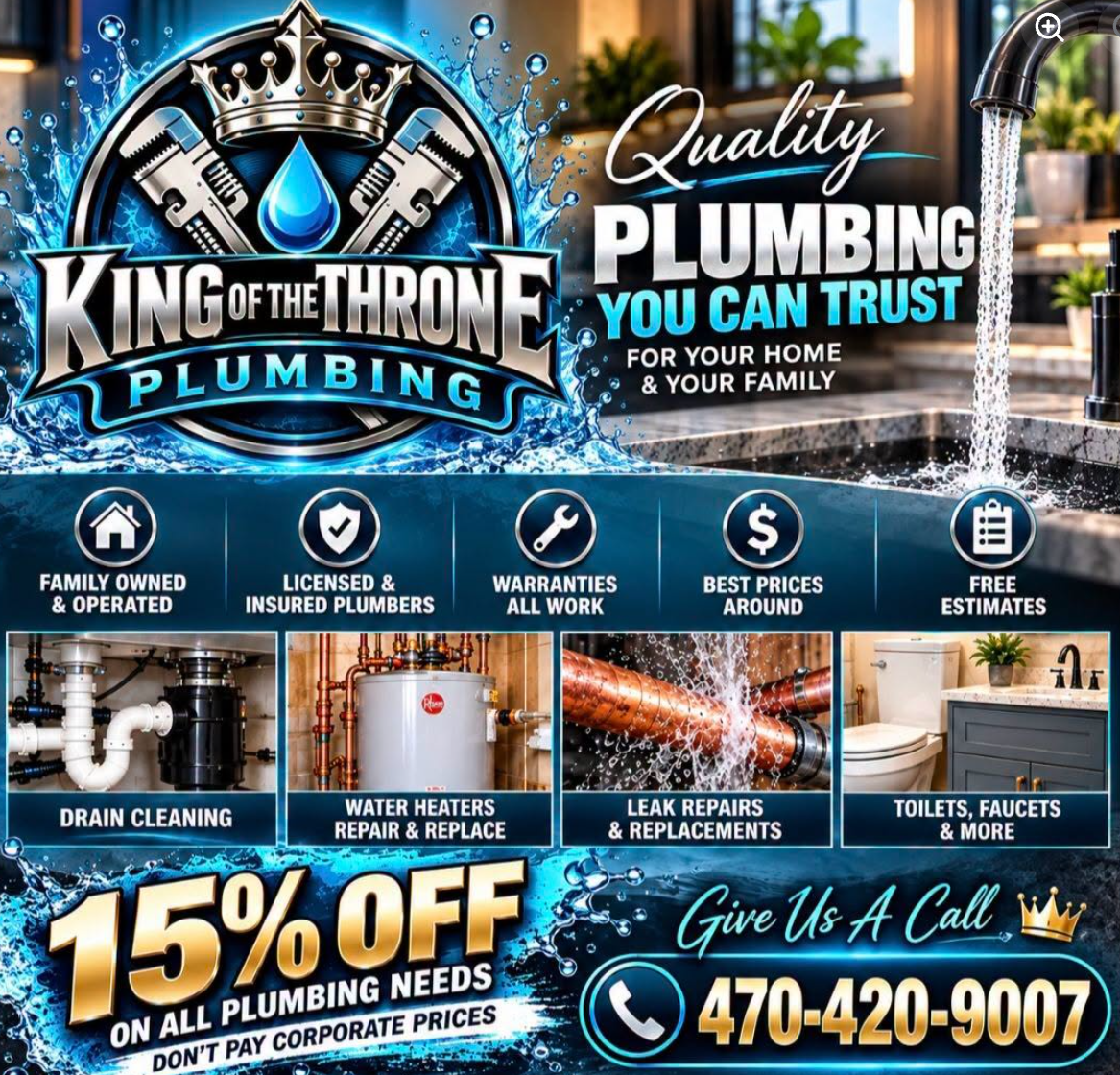 Badges, metallic type and water effects competing for attention on one page.
This is not just me being grumpy about flyers. Gartner surveyed consumers in September 2026 and found that 65% believe brands are producing too much AI-generated marketing content. 57% said that content has made them less trusting of brand messaging.
Bentley University and Gallup found something similar in their 2026 Business in Society survey. 79% of Americans had recently seen advertising that looked AI-generated. 49% viewed businesses using AI to create advertising negatively. Only 19% viewed it positively.
That last number is the one I keep thinking about. The upside of AI in marketing is real, but it is smaller than most people assume, and the downside is quiet. Nobody calls a landscaping company to tell them the flyer felt synthetic. They just do not call.
The Risk Isn't That Customers Know You Used AI
Most customers are not inspecting your files. They do not know whether Canva, Photoshop, ChatGPT or an image generator was involved, and honestly, they do not care. They react to the result.
The trouble starts when the shortcut shows.
Imagine two landscaping companies posting on the same day. One shares a phone photo of a backyard the crew finished yesterday. You can see the house, the grass, a Georgia sky that is not quite blue, and probably a truck in the corner of the frame. The other posts a flawlessly rendered backyard with impossible landscaping and a smiling family that does not exist.
The second image is technically prettier. I would trust the first company more.
The same math applies to roofers, pressure washing crews, HVAC companies, restaurants, contractors, Realtors and local retailers. If your work happens in the real world, real footage of it carries a kind of credibility that nothing generated can manufacture.
There Is Also Growing Baggage Around AI
Something shifted in the last year, and it has nothing to do with image quality.
AI is tangled up in public arguments about data center construction, energy and water use, copyright, creative jobs and job displacement. You do not have to take a side in any of those debates to notice they exist.
Reuters reported in July 2026 that opponents of data center expansion held 142 protests across 42 states in a single day, with water use and local infrastructure among the main concerns. On the creative side, the reality is more complicated than AI simply taking designers' jobs. Adobe's June 2026 research found creative work being redistributed rather than erased, with first-pass production moving to AI while judgment, direction and accountability stay with people.
I am not asking any business owner to resolve those questions. I am pointing out that marketing which reads as AI-generated now carries associations it did not carry two years ago. That is worth knowing before you make it the public face of your company.
Small Businesses Actually Have an Advantage Here
If you own a pressure washing company, you have dirty driveways and clean driveways. If you roof houses, you have roofs. Landscapers have yards, restaurants have food and customers, contractors have projects at every stage from demo day to final walkthrough.
Use the phone in your pocket. Photograph the truck. Photograph the crew. Photograph the job halfway finished, and the part that went sideways before you fixed it. Shoot fifteen seconds of video while you are already standing on site.
Posting real project photos consistently is also one of the more useful things you can do for local search visibility and for your Google Business Profile, which is where a lot of local customers make their first judgment about a business.
A slightly crooked photo of your actual work will usually outperform a flawless image of something your company never did. That is not philosophy. It is just what people respond to. If you want a starting point, most of my DIY local marketing playbook is built around this idea.
Where I Think AI Is Really Good
None of this is an argument against AI. I use it every week.
I use it to brainstorm twenty concepts before picking one. To rough out visual directions before opening a design tool. To pull a background off a real photo. To turn a question a customer asked me on the phone into a first draft of a social post. To get a first pass at website copy that I then rewrite in my own words. To resize one good piece of creative for five platforms. To handle the repetitive parts of marketing, which is usually where automation earns its keep.
I wrote earlier this year about where Google's own AI features actually help small businesses, and the takeaway there was the same as here. Useful, not magic.
The step I never skip is the second one. I do not take the first thing a tool hands me, drop a logo on it, and call it marketing.
Spend Another 20 Minutes
This is the part that separates marketing that looks like everyone else's from marketing that looks like yours, and it is not complicated.
If AI gets you the first 80%, spend another twenty minutes on the rest. Change the headline so it sounds like something you would actually say. Swap the fake photo for one of your real jobs. Cut half the text. Use your actual brand colors. Fix the spacing that feels off. Delete the icons that are not doing anything. Put your real phone number somewhere obvious.
Then run one test before you publish. Could a competitor drop their logo onto this piece and use it without changing a word? If the answer is yes, it is not finished.
Sometimes You Should Just Hire Someone
There are places where doing it yourself is a bad trade, even when the tools make it possible.
Your homepage. Your logo. A direct mail campaign going to thousands of homes. A paid campaign you are about to put real money behind. The primary materials your sales process depends on.
Customers will see those over and over, and the cost of getting them slightly wrong is bigger than the fee you avoided. There is nothing wrong with AI being part of that work. A good designer or developer probably uses it too. What surrounds the tool is the difference: judgment, taste, a real understanding of your customers, and the willingness to edit. That is the work I do as a marketing consultant, and AI is part of how I do it.
AI can make someone faster. It does not hand them taste.
The Question I Would Ask Before Posting Anything
Before an AI-made flyer, photo, website section or advertisement goes in front of customers, I would ask one question.
Does this actually look like my business?
Not: does this look professional? A generic stock photo looks professional. A generic AI website looks professional. A generic template looks professional. That bar was cleared years ago.
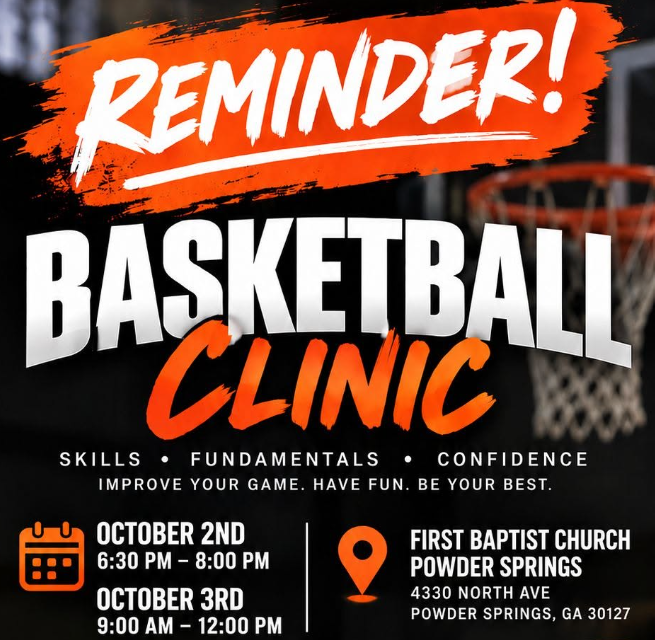 Swap the name, the date and the address and this layout could promote anything.
Recognizable. Believable. Specific to the company. Those are harder, and they are what people remember.
My Take
I use more AI today than I did a year ago. I expect to use more of it next year.
The more generated content fills up the internet, the more the real stuff stands out. Real photos, real projects, real opinions, an actual personality behind the business.
AI should make those things easier to communicate. It should not replace having them in the first place.
Frequently Asked Questions
Is it bad for a small business to use AI-generated images?
No. The trouble comes from using a generic generated image to represent work your business did not do, or filling a space where a real photo would be more convincing. Generated images can work fine for backgrounds, decorative pieces and quick concept tests.
Can AI build a small business website?
It can produce something functional, and for some businesses that is a reasonable starting point. The gap usually shows up in the details: positioning, page structure, how the site handles the services customers actually search for, and whether it looks like this business instead of any business. A cheap site often costs more later when it has to be rebuilt.
Should businesses disclose AI-generated images?
There is no simple rule that covers every case, and I am not a lawyer. My practical view: if a customer could reasonably assume a photo shows your real work, do not swap in something generated. If the image is clearly decorative, most people will not think twice. In regulated industries, check the advertising rules that apply to you.
How should small businesses use AI for marketing?
For speed and thinking: rough concepts, first drafts, image cleanup, resizing and repetitive tasks. Keep the final decisions, the real photography of your actual work, and the specifics of your business in your own hands. AI is a useful assistant and a poor substitute for knowing your customers.
Not Sure Whether It Looks Good?
If you built a website, flyer or marketing piece with AI and you are not sure whether it lands, I am happy to take a look. Sometimes it needs a redesign. Sometimes it just needs another twenty minutes of work.

Ben Carson
Owner, Carson Digital Media. Marietta, GA.