Google Is Testing Bigger Local Services Ads. Here's My Take for Local Businesses
Google is testing larger Local Services Ads in Search. Here's what the test means for local businesses and why I still recommend building strong SEO and GEO foundations before scaling paid ads.
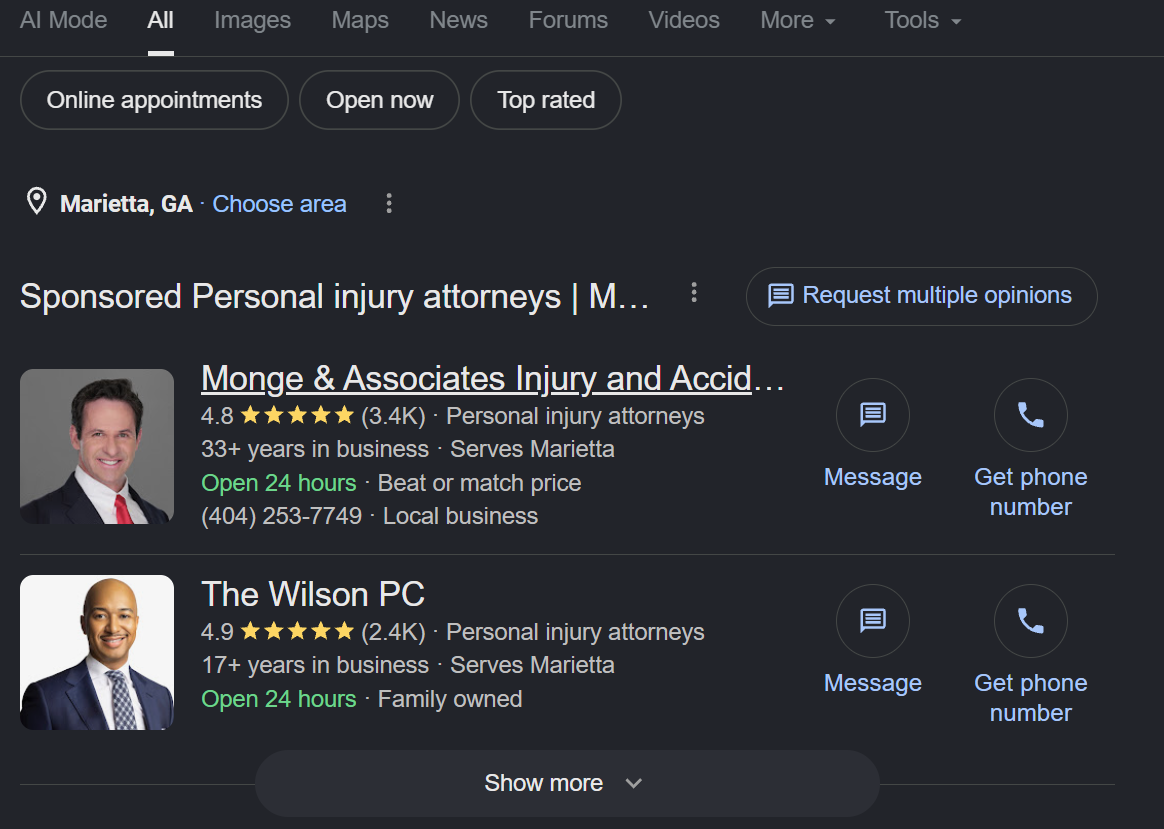
Google is testing a much bigger version of its Local Services Ads.
The format spotted this week uses larger photos and gives individual businesses noticeably more space in the search results. Search Engine Land reported the test on September 25, 2026, after it was flagged by a PPC advertiser watching the changes closely.
My first reaction isn't that every local business suddenly needs to start spending money on Local Services Ads.
Google tests ad formats constantly. What interests me more is what this tells us about where Google continues to put its attention.
Google Tests Things All the Time
Business owners should be careful not to overhaul their marketing every time Google tests a new search result, ad unit, or visual treatment.
Google continuously experiments with ad layouts, images, placement, AI-powered search experiences, Maps, and different ways businesses appear in search results. Some tests roll out broadly. Some disappear.
This particular larger LSA format may or may not become permanent. The useful part is watching the broader trend. Google keeps finding new ways to put useful business information and paid placements in front of people with strong commercial intent.
Why Local Services Ads Are Worth Paying Attention To
Local Services Ads are designed to connect people actively searching for local services with businesses that provide them. They are particularly relevant for many home service categories: plumbers, HVAC companies, electricians, roofers, lawn care companies, house cleaners, pest control companies, and movers.
Google currently uses a pay-per-lead model for LSAs rather than charging for every click. That can be appealing to a local business owner. Someone searching for an emergency plumber is very different from someone casually scrolling Instagram. That searcher already has a problem they need solved.
I wouldn't claim LSAs always produce profitable leads. Results depend on the market, category, competition, lead quality, budget, responsiveness, and the business's reputation.
Google also says LSAs can prominently show information such as the business name, services, service area, hours, and reviews. That is a lot of useful detail packed into a high-intent placement.
But I Wouldn't Start With Paid Ads
Before I recommend pouring money into paid acquisition, I want the business's foundation to look good.
If someone sees an ad, clicks the business, searches the company name, or compares it with competitors, what do they find? A business spending money on ads while having a weak website, an incomplete Google Business Profile, very few recent reviews, incorrect business listings, almost no local search visibility, outdated photos, or poor follow-up is paying to send more people into a weak conversion experience.
Paid advertising can create visibility. It cannot fix everything that happens after someone discovers the business.
This is the type of work I help local businesses with through Carson Digital Media, whether that means local SEO, Google Business Profile optimization, or a full website rebuild.
Get the Local SEO Foundation Right
Here is what I would want in place first.
Start with Google Business Profile optimization. Make sure services, categories, service areas, business information, and photos are correct. This is one of the highest-leverage things a local business can do, and it is also where a lot of businesses lose easy customers through simple mistakes.
Reviews matter. Build a consistent system for getting legitimate customer reviews and responding to them. I wrote more about why recent reviews affect local rankings, and Google's updated review guidelines are worth understanding if you ask customers for reviews.
Business listings and NAP consistency matter too. Make sure the business is accurately represented on Google, Apple Maps, Bing, Yelp, and other relevant platforms. I put together a list of free business listings every small business should claim if you want a starting point.
The website should clearly explain what the company does, where it works, why someone should trust it, and how to contact it. Build useful service pages around the actual services customers search for. Then build real local authority over time through relationships, citations, mentions, and backlinks.
GEO Is Becoming Part of the Foundation Too
GEO stands for Generative Engine Optimization. It is not some completely separate magic replacement for SEO.
Customers increasingly discover and research businesses through AI-powered search experiences and answer engines in addition to traditional Google results. The same things that make a local business easier for search engines to understand can also help AI systems understand the company: clear service information, clear location information, useful website content, strong reviews, consistent listings, mentions from other trusted websites, real expertise, and specific information about what the company actually does.
The point is not to trick ChatGPT. The point is to make the business easy for both people and search systems to understand and trust.
Then Paid Ads Can Add Fuel
Once the business has a credible digital presence, paid acquisition becomes much more interesting. At that point, channels such as Local Services Ads, Google Search Ads, and other appropriate Google Ads campaigns can help put the business in front of more high-intent customers.
I think of SEO, GEO, reviews, and your website as building the foundation. Paid advertising lets you buy additional visibility on top of it.
Paid and organic should work together rather than being treated as competing strategies. Someone may see an LSA, search the company name, look at Google reviews, visit the website, compare the business with competitors, and call. The ad might create the first interaction, but the rest of the business's digital presence helps close the lead.
What Google's Bigger LSA Test Means to Me
I wouldn't change a local marketing strategy today just because Google is testing a larger LSA layout. I would pay attention to it.
Google clearly continues to invest in ways of connecting high-intent local searches with paid business listings. If the larger format eventually rolls out, LSAs could become even harder to ignore in competitive home service categories.
But I still wouldn't tell a business owner to skip the basics and immediately start buying leads. Get your presence right first. Then determine whether Local Services Ads, traditional Google Ads, or another paid channel makes sense based on the business and the market.
How Carson Digital Media Can Help
This is the type of marketing mix I help local businesses work through. Depending on where the business is today, that could mean improving local SEO, optimizing the Google Business Profile, fixing or rebuilding the website, building a review automation system, improving visibility in AI-driven search, setting up and managing Google Ads, evaluating whether Local Services Ads make sense, or tracking which channels actually generate leads.
I don't want to sell every business every service. I want to identify what is currently holding the business back and work from there. If you are in Cobb County or metro Atlanta, I also put together a Cobb County digital marketing overview for local readers.
If you're a local business owner wondering whether you should be investing in Local Services Ads, Google Ads, SEO, or something else, I'm happy to take a look at what you already have in place. Usually the first step is figuring out where the biggest gap is. Reach out here and I'll take a look.
Frequently Asked Questions
What are Google Local Services Ads?
Local Services Ads are Google's pay-per-lead ad format for local service businesses. They appear at the top of search results for local service queries and can show the business name, services, service area, hours, and reviews.
How are Local Services Ads different from regular Google Ads?
Regular Google Ads typically charge per click. LSAs charge per lead, meaning you pay when a potential customer contacts you rather than every time someone clicks. LSAs are also limited to eligible service categories and require Google to screen the business.
Should I do SEO before running Google Ads?
A business can run paid ads without first ranking organically. My preference is to make sure the website, Google Business Profile, reviews, and basic local presence are in good shape before aggressively scaling paid campaigns, because those assets influence what a potential customer sees after discovering the company.
Do Local Services Ads help local SEO?
Buying LSAs does not directly buy higher organic or Google Maps rankings. Paid and organic visibility are separate. They can complement each other as part of a broader marketing strategy.
Are Local Services Ads worth it for home service businesses?
For many eligible home service categories they can be a strong channel because the leads tend to be high-intent. Whether they are worth it for a specific business depends on the market, competition, lead quality, budget, responsiveness, and the strength of the business's overall online presence.
Not Sure Where to Start?
I'll look at what you already have in place and tell you where the biggest gap is. No pressure, no pitch.

Ben Carson
Founder, Carson Digital Media. Marietta, GA.